Museum in Aveyron: Tourist and Cultural Sites
Discovering the Museum of Cardinal Jean Verdier, a Remarkable Figure of the Church in France
In the peaceful village of Lacroix-Barrez, nestled in the heart of Aveyron, a unique place invites to memory and discovery: a small museum, located in the crypt of the church, dedicated to Cardinal Jean Verdier, emblematic figure of the French Catholic Church of the twentieth century.
Born on February 19, 1864 in Lacroix-Barrez, Jean Verdier began his life as a little shepherd, before embarking on an exceptional ecclesiastical journey. Ordained a priest in 1887, he became successively teacher, superior of a seminary, apostolic protonotary, then archbishop of Paris in 1929. That same year, he was elevated to the rank of cardinal by Pope Pius XI.
Man of faith and action, he is best known for having launched, in 1931, the great work of the Chantiers du Cardinal, which allowed the construction of more than 110 churches in Paris, in the suburbs, and elsewhere in France. This large-scale project aimed to respond to the rapid urbanization of the time, by bringing places of worship to growing neighborhoods.
The museum traces, through a guided tour, the major stages of the life of this cardinal builder. One discovers personal objects, family memories, handwritten letters, photographs of time, as well as rare historical documents. Sacerdotal clothing, lent by the churches of the canton and testifying to the richness of the Sacraments celebrated in the different parishes, complete this immersion in the spiritual and human journey of Jean Verdier.
Coming from the Congregation of the Sulpicians, he has always attached great importance to the formation of priests and parish life, aware of the vital role they play in the lives of the faithful. As bishop, then cardinal, he worked tirelessly to nourish the Christian faith, particularly through the celebration of mass and the transmission of the sacraments.
This museum, modest but rich in testimonies, is an invitation to memory, spirituality, but also to the discovery of local heritage. It allows for a better understanding of the scope of the cardinal’s work, while valuing his rural roots and his attachment to his native land.
Jean Verdier (1864 – 1940): From an Aveyron Village to the Archdiocese of Paris
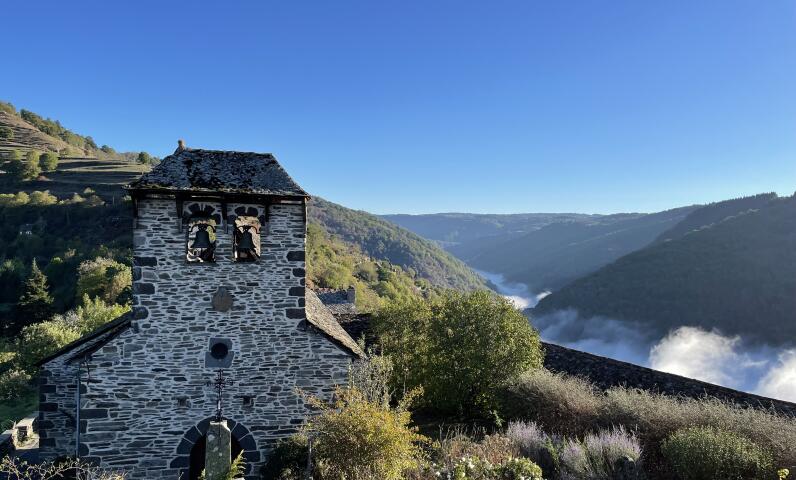
Jean Verdier was born on February 19, 1864, in Lacroix-Barrez, a small village in the Aveyron. Coming from a modest family, he grew up in a rural and pious environment, where he began his life as a small shepherd. Very early on, he distinguished himself by his intelligence, his deep faith, and his taste for study.
He continued his training at the Seminary of Rodez, then in 1886 joined a society of teaching priests among the Sulpicians. He was ordained a priest on April 9, 1887. Then begins a career in the service of training future priests: he teaches at the Seminary of Périgueux, which he directs from 1898 to 1912, before joining the Faculty of Theology in Paris. From 1912 to 1920, he held important positions there, notably that of superior of the Seminary of the Carmelites.
Recognized for his pedagogical qualities, his intellectual rigor and his radiant faith, Jean Verdier continues his rise: he is named honorary canon of Notre-Dame de Paris in 1923, then becomes, in 1926, superior general of the Company of the Priests of Saint-Sulpice.
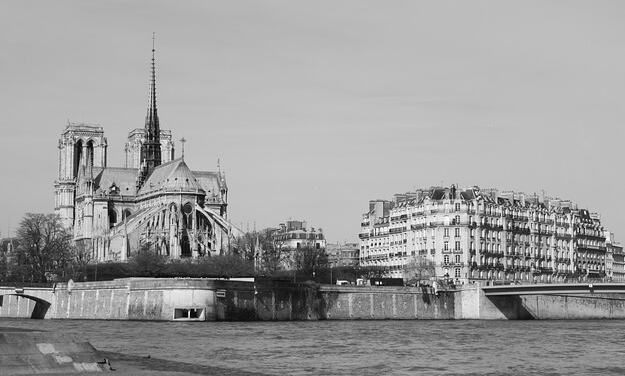
In 1929, his destiny took a national turn: he was successively appointed vicar general of the diocese of Paris, apostolic protonotary, then archbishop of Paris. The same year, Pope Pius XI created him cardinal priest, attached to the Roman church of Santa Balbina. This appointment makes him one of the most influential religious figures of his time.
During his ministry in Paris, Cardinal Verdier distinguished himself by his pastoral and social commitment. He intervenes in the great debates of his time, but above all, he leaves a lasting mark thanks to a major work: in 1931, he founded the Chantiers du Cardinal, an ambitious initiative aimed at building churches in the popular districts of Paris and its suburbs. In a few years, more than 110 churches are born, responding to urban expansion and the spiritual needs of the inhabitants.
In parallel, he represents the pope as a legate at numerous religious events, in France and abroad. He is also a reassuring and unifying figure in an era marked by social and political tensions.
Jean Verdier died in Paris on April 9, 1940, at the age of 76. He is buried in the Cathedral of Notre-Dame de Paris, a symbolic place, worthy of the influence he exerted on the Church of France.
Legacy
Cardinal Jean Verdier is remembered as a man of faith, vision and action. Coming from a modest rural background, he rose through work, faith and intelligence to the highest responsibilities of the Church. His work, in particular the Chantiers du Cardinal, continues to mark the French religious landscape. His local anchorage in Lacroix-Barrez and his national influence make him an exemplary figure of the French clergy of the 20th century.
The Greatest Achievements of Cardinal Jean Verdier
The Chantiers du Cardinal (1931) – A Monumental Work
It is undoubtedly the most significant initiative of his ministry in Paris. Noting the demographic explosion in the peripheral districts of Paris and the glaring lack of places of worship, Cardinal Verdier launched in 1931 the Chantiers du Cardinal, a vast program of church construction.
- Objective: to build modern churches in newly urbanized working-class neighborhoods.
- Result: more than 110 churches built in about ten years, in Paris and throughout the Île-de-France.
- Heritage: these churches, often architecturally innovative, are still active today and bear witness to his pastoral and social concern.
"Stones for God, churches for the people" could be the motto of this work."
An Elite Educator and Trainer
Before becoming a cardinal, Jean Verdier devoted more than 30 years to the formation of priests. He teaches, leads seminars, and deeply marks several generations of young clerks.
- Director of the Seminary of Périgueux (1898–1912)
- Superior of the Carmelite Seminary in Paris (1912–1920)
- Superior General of the Sulpicians (1926–1929)
He contributes to modernizing theological formation, strengthening ecclesiastical discipline and transmitting an incarnate Christianity, demanding and close to the people.
Archbishop of Paris (1929 – 1940) – A Respected Authority
Appointed in 1929, he becomes one of the highest figures of the Church in France. In this position, he plays a crucial role at a troubled time (economic crisis, rise of totalitarianisms, beginning of the Second World War).
- He is a man of peace, of dialogue, engaged in public debate.
- He works for the unity of the Church, support for the poorest, and the place of Catholics in French society.
A Representative of the Pope on the International Stage
As cardinal-legate, Jean Verdier represents Pope Pius XI several times during major religious ceremonies in France and abroad. He becomes a diplomatic and spiritual figure of the universal Church.
A Moral Voice in the 1930s
In a France marked by the rise of extreme ideologies, Verdier often speaks to defend justice, peace and human dignity. He warns against political excesses, while advocating a Catholicism rooted in charity and action.
The Churches of the Chantiers du Cardinal
Three Iconic Churches of the Chantiers du Cardinal
At the instigation of Cardinal Jean Verdier, dozens of churches were built in the 1930s, mainly in Île-de-France. Among them, some have become references both by their innovative architecture, their pastoral mission, and by their anchorage in the popular neighborhoods. Here are three striking examples.
Saint-Louis Church of Vincennes
Located in the commune of Vincennes, near Paris, the church of Saint-Louis is one of the first buildings built as part of the Chantiers du Cardinal, between 1924 and 1927 (even before the official creation of the Chantiers, it announces its spirit).
Its architecture mixes neo-Romanic style and elements of Byzantine inspiration. It stands out for:
- Its massive and sober facade
- An imposing bell tower shaped like a square tower
- Beautiful stained glass windows and an interior atmosphere conducive to meditation
Saint-Louis de Vincennes responded to the need to support the demographic growth of the eastern suburbs of Paris, while being a symbol of the anchorage of Catholicism in modern neighborhoods.
Saint Odile Church (17th arrondissement of Paris)
Built between 1935 and 1946, the church of Sainte-Odile is undoubtedly one of the architectural jewels of the Chantiers du Cardinal. Located in the 17th arrondissement of Paris, it is remarkable in several ways.
It was one of the first reinforced concrete churches in Paris, a real technical feat at the time.
Its art deco style makes it a rare architectural work, with:
- A monumental brick and stone facade
- A 72-meter bell tower, one of the highest in the capital
- Magnificent mosaics, created by Dom Robert, monk Benedictine and artist
Dedicated to Sainte-Odile, patron saint of Alsace and the blind, it is also a very active place of worship, hosting many celebrations, concerts and cultural events. This church perfectly illustrates the will of Cardinal Verdier: architectural modernity, spiritual richness, and strong presence of the Church in the city.
Saint Anthony of Padua Church (15th arrondissement of Paris)
Located in the 15th arrondissement of Paris, the church of Saint-Antoine de Padoue was built between 1933 and 1935, in the heart of a booming district.
Its modern and functional architecture reflects a desire for simplicity and proximity to the inhabitants.
The church presents:
- An elegant red brick facade
- A spacious, bright nave designed to accommodate large assemblies
- A rich interior decoration, including frescoes and works dedicated to Saint Anthony of Padua
This church illustrates the heart of the mission of the Chantiers du Cardinal: to build places of prayer that are accessible, warm and rooted in the daily lives of families.
A Living Legacy
These three churches are not only witnesses of the past. They are always active, alive, open to all, and deeply rooted in their territory. They embody the intuition of Cardinal Verdier: beauty, simplicity and spirituality brought together to bring faith to the heart of cities.
A Place of Remembrance at Notre-Dame de Paris
A Burial in a Sacred Place
Among the great religious figures buried in the capital, Cardinal Jean Verdier occupies a discreet but highly symbolic place. Since his death on April 9, 1940, he rests in the crypt of the Cathedral Notre-Dame de Paris, one of the most emblematic places of Christianity in France.
A Discreet but Essential Memory
The archaeological crypt of Notre-Dame is not permanently open to the general public, but the tomb of Cardinal Verdier, located in the choir of the cathedral, is real and preserved.
It is a sober place of meditation, but one with great symbolic value. Being buried at Notre-Dame de Paris is a rare honour, reserved for those who have profoundly marked the history of the Church in France.
A Silent Tribute at the Heart of History
Although little known by the general public, this tomb is still visitable during certain events or services. It sometimes attracts historians, researchers or the faithful who are familiar with the cardinal’s work. It testifies to the spiritual and pastoral importance of Jean Verdier, archbishop of Paris from 1929 to 1940, in a complex period for the Church and French society.
Notre-Dame de Paris, national and religious symbol, carries in its stones the memory of major figures. By resting there, Cardinal Verdier remains at the heart of the history of the Church of France, in the very place where he worked so hard as an archbishop. This place of memory is an invitation to silence, reflection and recognition towards a man of faith, vision, and service.
A Name Engraved in Streets and Community Spaces
If Cardinal Jean Verdier is a major figure of the Church in the 20th century, his memory goes beyond the religious framework: it is inscribed in the French urban landscape, through streets, establishments or parish spaces that today bear his name.
In several French communes, there are 'Rue du Cardinal Verdier', notably at:
- Paris, in the 15th arrondissement, not far from the church of Saint-Antoine de Padoue that he had built
- Alfortville (Val-de-Marne)
- Saint-Denis (Seine-Saint-Denis)
- Villeneuve-Saint-Georges (Val-de-Marne)
- And in other cities of Île-de-France and elsewhere
These street names are a discreet but constant tribute, anchoring the memory of the cardinal in the daily life of the inhabitants, often without them knowing the full extent of his work.
Some schools, parish centers or community halls also bear his name, in connection with its educational mission and its role in the construction of the local Church. This is the case in several parishes of Île-de-France which continue to keep alive its spiritual and pastoral heritage, notably through social, educational or liturgical actions.
Meeting Cardinal Jean Verdier: Faith, Builder, and Spiritual Legacy
Come live a unique experience at the museum of Cardinal Jean Verdier in Lacroix-Barrez, a place full of history and spirituality. This museum invites you to dive into the life of a man who dedicated his life to faith, to the parish and to the mission of evangelization.
Discover how Cardinal Verdier, guided by the Holy Spirit, worked to build churches where each altar is a sacred place of consecration and celebration of the sacraments, including the Eucharist, central moment of Christian life. He accompanied many vocations, encouraging young people to become priests, and celebrating with emotion the ordinations of priests and deacons, living pillars of local faith, in respect for canon law, and inspired by the first apostles in their evangelical mission.
Coming from a time when monks played a central role in the transmission of faith and monastic life, Jean Verdier was able to combine tradition and modernity to meet the spiritual needs of a world in full transformation. As a missionary at heart, he was actively involved in the episcopal life, participating especially in synods, strong moments of encounter, discernment and communion, to strengthen the mission of the diocesan and universal Church.
He also encouraged and supported the chaplains, present in hospitals, schools, prisons and armies, true relay of the Word of God to the most vulnerable.
This museum is an invitation to understand this ambitious work of evangelization, which has made it possible to build more than 110 places of worship in France, living places where communities gather to celebrate masses, pray, and grow in faith. It also highlights the importance of parish life, based on fraternity and sharing.
The Word of God, transmitted with fervor, still resonates in the objects, writings and memories preserved in the museum. One perceives there the richness of a committed Christian life, nourished by the Gospel, and supported by a pastoral team at the service of the faithful. The museum also pays tribute to the Christian women and men who, following the cardinal’s example, spread the faith in villages and towns.
Join us on a journey through time, in an authentic and emotionally charged setting, and let yourself be inspired by the journey of a man at the service of God and men.
A Rare Museum Dedicated to Cardinal Jean Verdier
At the heart of the village of Lacroix-Barrez, in the Aveyron, is a moving and authentic place, unique in its kind: a museum dedicated to Cardinal Jean Verdier, one of the great builders of the Catholic Church of the 20th century.
This small museum of memory is installed in the crypt of the parish church, just a few steps from where the cardinal was born in 1864, in a modest rural family.
A Life Journey Told Through Personal Belongings
This intimate and warm museum traces the exceptional journey of Jean Verdier, from little shepherd of the Aubrac to archbishop of Paris and cardinal of the Church.
We discover a precious and touching collection, composed of:
- Personal items that belonged to the cardinal (books, rosaries, crosses, etc.)
- Sumptuous sacerdotal clothing, from the churches of the canton
- Ancient photographs, often unpublished
- Handwritten letters, official documents and press extracts
- Family memories, evoking his childhood in Lacroix-Barrez
- Testimonies of his action in Paris and within the Chantiers du Cardinal
This museum is a dive into the history of a simple man, who became a national figure, while remaining deeply attached to his rural roots.
A Living Place of Memory, on a Human Scale
The museum is run by local volunteers, passionate and attached to the memory of this great Aveyronnais.
It can be visited by reservation, individually or in groups, with guided tours that allow a better understanding of the human, spiritual and historical scope of the cardinal’s work.
The place is particularly appreciated for its human and sincere dimension: far from the great institutional museums, it offers a personal encounter with history, in a peaceful and inspiring setting.
A Strong Link Between Territory, Faith, and Memory
This museum reminds us that Jean Verdier never forgot his origins. Despite his high position in Paris, he remained deeply connected to his native village, its lands, its language, and its people.
Today, this place contributes to living the local memory, while valuing the religious and historical heritage of North Aveyron.
Directions
- From the Laussac Peninsula (near Lake Sarrans), take the D13 towards Mur-de-Barrez.
- In Mur-de-Barrez, follow the D200 then the D53 towards Lacroix-Barrez.
- The road winds through the valleys and hills of Carladez, with about 15 to 20 minutes drive from Mur-de-Barrez.
- Once arrived, the museum of Cardinal Verdier is located in the crypt of the parish church, in the heart of the village.
Count about 30 to 40 minutes by car in total